night chapter 5 questions and answers pdf
Night: A Comprehensive Exploration
Exploring “night” reveals its multifaceted nature‚ from historical time expressions to cultural perceptions and psychological impacts‚ as documented in various resources.
Origins and Historical Usage of “Night”
Historically‚ the term “night” denoted the period of darkness following sunset‚ a fundamental division of time predating precise measurement. Early usage centered on observing the absence of sunlight‚ influencing daily rhythms and societal structures. The expression “at night‚” indicating a specific time‚ evolved gradually‚ initially perhaps referencing the onset of darkness itself.
Old texts reveal “night” wasn’t always a fixed timeframe; its beginning and end were fluid‚ tied to natural light cycles. The prepositional usage – “in” versus “at” with “night” – reflects this evolution‚ with “at” often marking a specific point within the night‚ while “in” suggests a duration during nighttime. Understanding these origins provides context for its contemporary applications.
The Evolution of “At Night” as a Time Expression
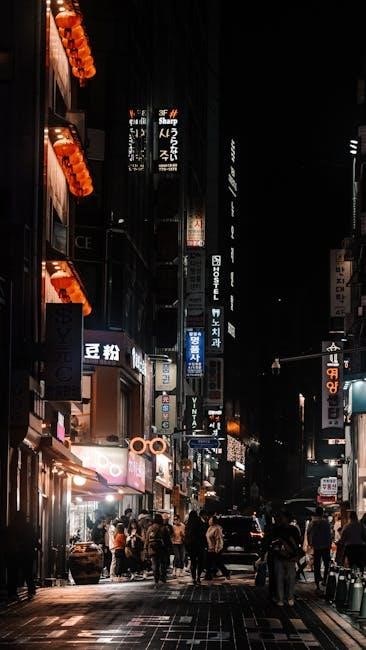
The phrase “at night” solidified as a time expression over centuries‚ transitioning from a descriptive observation to a standardized temporal marker. Initially‚ “night” likely represented a broader period‚ but as societies developed more precise timekeeping‚ “at night” pinpointed activities occurring during darkness.
Early usage might have been less rigid‚ with the start of “night” varying. However‚ standardization occurred alongside societal needs for scheduling and coordination. The preposition “at” became crucial‚ denoting a specific point within the nighttime period. This evolution reflects a shift from natural observation to a more structured understanding of time‚ impacting language and daily life.
Prepositions with “Night”: “In” vs. “At”
The choice between “in” and “at” with “night” hinges on nuanced distinctions of time and context. Generally‚ “at night” specifies a point within the nighttime period – a particular occurrence happening during darkness. For example‚ “I work at night.” This denotes a regular activity during nighttime hours.
Conversely‚ “in the night” suggests a duration or a more encompassing timeframe within the overall night. It implies something happening throughout a portion of the night‚ rather than at a specific moment. Usage can be subtle‚ and sometimes interchangeable‚ but “at night” is overwhelmingly the more common and accepted idiom for indicating a time of day.
Night as a Period of Time: Defining the Hours
Defining “night” as a specific timeframe proves surprisingly fluid‚ varying across cultures and individual perception. While astronomically defined by the absence of sunlight‚ practical definitions center around sleep and reduced activity. Many consider night to span roughly from 11 PM to 4 AM‚ aligning with typical sleep schedules‚ though this is not universally agreed upon.
The start and end of night are subjective‚ influenced by daylight savings and geographical location. Some perceive night beginning at dusk‚ while others pinpoint a later hour. Ultimately‚ “night” functions as a broad temporal concept‚ encompassing the hours of darkness and quietude between day and dawn.
Night’s Start: Varying Cultural Perspectives (11 PM ─ 4 AM)
The perceived commencement of “night” isn’t uniform globally; cultural norms significantly shape its definition. While a common Western perspective places night’s beginning around 11 PM‚ coinciding with reduced social activity and preparation for sleep‚ other cultures differ. Eastern traditions may associate night’s start with specific prayer times or the complete setting of the sun.
The 11 PM to 4 AM timeframe represents a practical‚ modern understanding‚ often linked to work schedules and societal rhythms. However‚ historical contexts and rural lifestyles often featured later bedtimes‚ extending night’s perceived duration. Individual experiences and daily routines also contribute to subjective interpretations of when night truly begins.
Night’s End: Transition to Morning
The shift from night to morning isn’t abrupt‚ but a gradual transition marked by increasing light and activity. This change is deeply connected to the sunrise‚ a universally recognized signal of night’s conclusion. However‚ the precise moment of transition varies based on latitude‚ season‚ and weather conditions.
Culturally‚ the end of night often coincides with the start of morning rituals – prayer‚ work‚ or simply waking. The psychological impact of this transition is significant‚ influencing mood and energy levels. Modern life‚ with artificial lighting‚ can blur this natural boundary‚ delaying the perception of morning’s arrival and impacting circadian rhythms.
“Day and Night” as a Concept
The pairing of “day and night” represents fundamental duality – light versus darkness‚ activity versus rest‚ consciousness versus the subconscious. This concept is deeply ingrained in human thought and appears across cultures as a symbol of opposing forces in constant interplay. It signifies cycles‚ completion‚ and the natural rhythm of existence.
The phrase often denotes continuous or exhaustive action‚ as in “working day and night.” However‚ it’s crucial to distinguish this from the less idiomatic “day and night time‚” which is more appropriate in technical contexts. This distinction highlights how language evolves and refines its expressions over time‚ reflecting nuanced meanings.
“Day and Night” vs. “Day and Night Time” — Idiomatic Usage
The phrase “day and night” is a well-established idiom signifying continuous or relentless activity‚ often used to emphasize dedication or persistence – working “day and night” to achieve a goal. Its strength lies in its concise and evocative imagery. Conversely‚ “day and night time” lacks this idiomatic punch and feels somewhat redundant.
While grammatically correct‚ “day and night time” is primarily found in technical or specific contexts where precise temporal differentiation is needed. It doesn’t carry the same cultural weight or figurative meaning as its shorter counterpart. Choosing between the two depends heavily on the desired nuance and the overall tone of the communication.
Informal Uses of “Night”
“Night” frequently transcends its literal meaning‚ appearing in affectionate and familiar expressions. The most prominent example is “nighty-night‚” a charming and endearing way to wish someone a peaceful sleep. This usage adds a touch of warmth and intimacy‚ particularly when addressing children or loved ones. It’s considered a gentle and comforting farewell.
While a formal written equivalent isn’t firmly established‚ “nighty-night” remains largely confined to spoken language. Its written representation often retains the playful spelling to convey the intended tone. This informal application highlights how language adapts to express emotional connection and create a sense of closeness.
“Nighty-Night”: A Familiar Expression of Goodnight
“Nighty-night” serves as a tender and informal alternative to a standard “goodnight‚” imbued with a sense of affection and coziness. It’s commonly used when addressing children‚ partners‚ or close friends‚ offering a comforting farewell before sleep. The repetition of “night” amplifies the sentiment‚ creating a soothing and playful tone.
Interestingly‚ while widely spoken‚ a universally accepted formal written equivalent remains elusive. Often‚ the phrase is retained in its spoken form even in writing‚ preserving its inherent warmth. Some suggest it evokes a feeling of sweetness‚ potentially making dreams more pleasant‚ particularly for the recipient; It’s a linguistic shortcut to convey care and well-wishing.
Night in Literature and Gaming
Night frequently serves as a potent backdrop in both literature and gaming‚ shaping narratives and character development. Consider “The Night Of‚” a series lauded for its compelling character portrayals‚ where the darkness amplifies the dramatic tension and moral ambiguities. The story’s impact stems from its realistic depiction of events unfolding under the cover of night.
Similarly‚ in the visual novel “Fate/stay night‚” Saber’s character arc undergoes a significant transformation. The night‚ often associated with battles and revelations‚ becomes integral to her journey. A 2000 Computer Gaming World preview highlighted “Night”’s immersive world‚ emphasizing player agency. These examples demonstrate how night isn’t merely a setting‚ but a narrative force.
“The Night Of”: Character Development and Impact
“The Night Of” distinguishes itself through exceptionally well-developed characters‚ profoundly impacted by the events unfolding during the night. The series doesn’t focus solely on the crime itself‚ but delves into the psychological toll on those involved – Naz Khan‚ Detective Box‚ and even the supporting cast.
While the specific plot details might fade with time‚ the characters remain memorable due to their complexity and realistic portrayals. The nighttime setting isn’t just atmospheric; it mirrors the moral ambiguity and hidden truths at the heart of the story. The show’s success lies in its ability to create empathy‚ even for flawed individuals caught in difficult circumstances‚ all under the cloak of night.
“Fate/stay night”: Saber’s Character Arc and Transformation
Saber’s journey in “Fate/stay night” showcases a compelling transformation‚ particularly striking when contrasted with her portrayal in “Fate/Zero.” Initially presented as a stoic and unwavering knight dedicated to the Holy Grail‚ her character gradually reveals layers of vulnerability and internal conflict.
The shift from her zealous pursuit in the earlier work to a more accepting stance demonstrates significant growth. This evolution isn’t simply a change of heart‚ but a consequence of experiencing human connection and confronting the complexities of the modern world. The nighttime battles and trials force Saber to re-evaluate her ideals‚ ultimately leading to a nuanced and emotionally resonant character arc.
Night in Different Contexts
The concept of “night” extends far beyond its literal definition‚ permeating diverse fields from technical applications to artistic expression. In technical contexts‚ precise timing related to nighttime hours is crucial‚ differentiating between “day and night” versus “day and nighttime” for accuracy.
Furthermore‚ night’s significance is evident in surveillance and security technologies‚ where artificial light impacts natural cycles. Conversely‚ in creative realms like gaming‚ as seen in “Fate/stay night” and “The Night Of‚” night serves as a powerful narrative tool‚ shaping character development and dramatic tension. Its symbolic weight is consistently leveraged across various disciplines.
Night in Technical Applications
Within technical fields‚ “night” isn’t merely a period of darkness but a defined timeframe demanding precision. Distinguishing between “day and night” and “day and nighttime” becomes critical in scheduling‚ data logging‚ and automated systems. Accurate recognition of nighttime hours is vital for energy management‚ optimizing performance based on ambient light levels‚ and ensuring efficient operation of various technologies.
Moreover‚ advancements in nighttime surveillance and security technologies rely on understanding and adapting to low-light conditions. These applications necessitate precise timekeeping and algorithms designed to function optimally during the night‚ showcasing its practical importance.
The Significance of Night in Storytelling
Night consistently serves as a potent narrative device‚ imbued with symbolic weight and dramatic potential. It frequently embodies mystery‚ the unknown‚ and the unleashing of hidden forces‚ creating an atmosphere of suspense and vulnerability. Authors leverage nighttime settings to heighten emotional impact‚ as darkness often mirrors internal turmoil or foreshadows impending conflict.
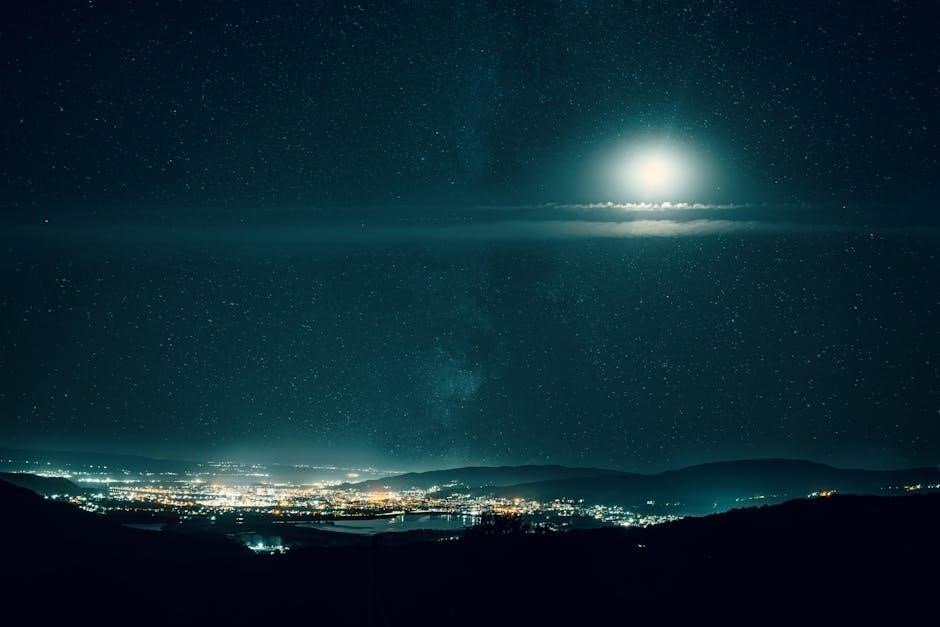
Dramatic events are frequently staged under the cover of night‚ amplifying tension and obscuring clarity. Characters often undergo significant transformations or confront pivotal challenges during these hours‚ making night a crucial element in character development and plot progression‚ as seen in compelling narratives.
Night as a Symbol of Mystery and the Unknown
Throughout literature and folklore‚ night has consistently represented the realm of mystery and the unexplored. The absence of light obscures vision‚ fostering a sense of uncertainty and inviting speculation about what lurks beyond perception. This inherent ambiguity makes night an ideal setting for supernatural occurrences‚ hidden agendas‚ and the surfacing of repressed fears.
The darkness symbolizes the unknown aspects of the human psyche‚ the subconscious mind‚ and the secrets individuals keep concealed. Night’s association with dreams further reinforces its connection to the intangible and the enigmatic‚ offering a space for introspection and the exploration of hidden truths.
Night as a Setting for Dramatic Events
The cloak of night frequently serves as a backdrop for heightened drama and pivotal moments in storytelling. Reduced visibility and the cover of darkness provide opportunities for clandestine meetings‚ daring escapes‚ and confrontations fraught with tension. This atmospheric quality amplifies suspense‚ as characters navigate a world where danger can emerge from any shadow.
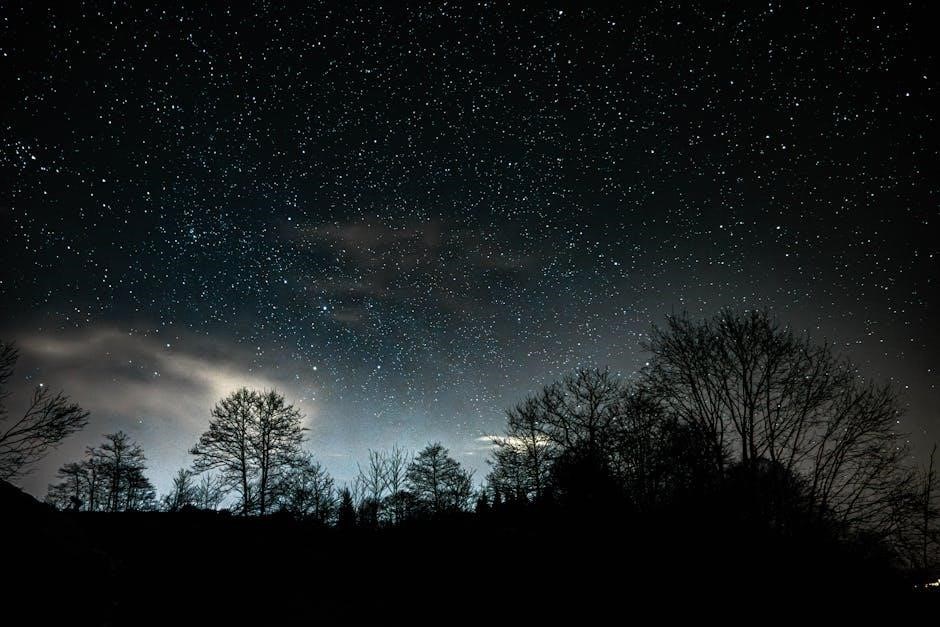
Historically‚ night has been linked to increased vulnerability and lawlessness‚ making it a natural setting for crimes‚ battles‚ and tragic events. The psychological impact of darkness on characters – fear‚ anxiety‚ and heightened senses – further intensifies the dramatic stakes‚ creating a compelling narrative environment.
Cultural Perceptions of Night
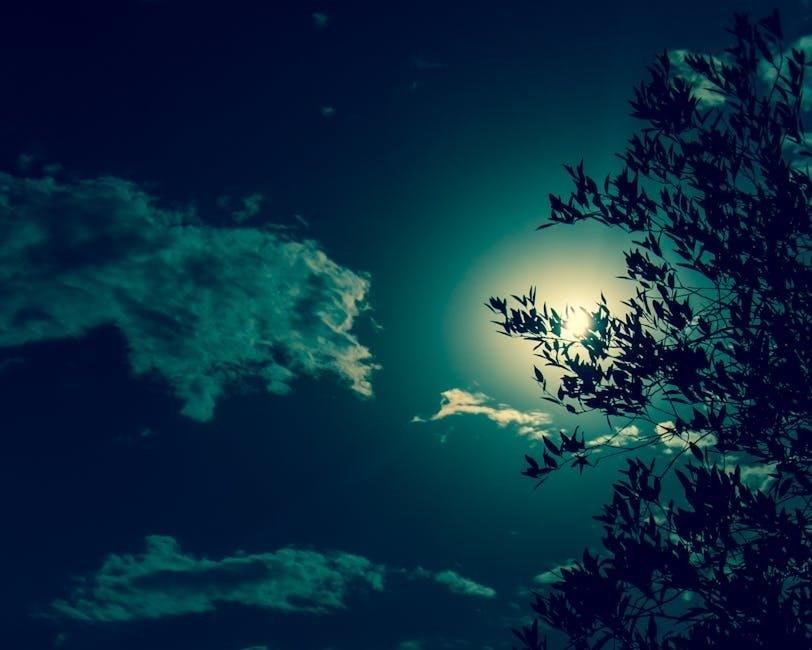
Across the globe‚ night holds diverse cultural significance‚ shaped by historical beliefs‚ societal norms‚ and environmental factors. In many Eastern cultures‚ night is often associated with spirituality‚ introspection‚ and the realm of ancestors‚ fostering a sense of reverence and mystery. Conversely‚ Western cultures have historically viewed night with a degree of apprehension‚ linking it to danger‚ the unknown‚ and the supernatural.
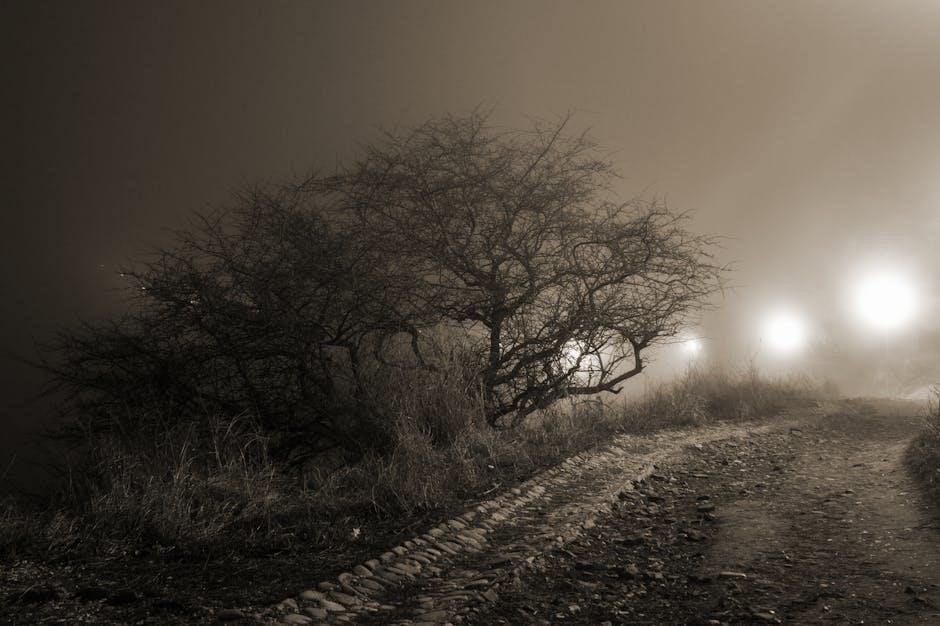
These perceptions influence traditions‚ folklore‚ and artistic expression. Rituals performed under the cover of darkness‚ nocturnal festivals‚ and the symbolic use of night in literature all reflect these deeply ingrained cultural attitudes. Understanding these nuances provides valuable insight into how different societies interpret and experience the nighttime hours.
Night in Eastern Cultures
Eastern cultures frequently imbue night with spiritual significance‚ viewing it as a time for heightened connection to the ancestral realm and inner contemplation; Traditional practices often emphasize the power of darkness for divination‚ meditation‚ and accessing deeper levels of consciousness. Folklore is rich with tales of nocturnal spirits‚ deities‚ and mythical creatures that emerge under the cover of darkness.
Festivals and ceremonies are often timed to coincide with specific phases of the night‚ harnessing its perceived energy. This contrasts with some Western views‚ where night historically carried connotations of fear. The emphasis in Eastern traditions leans towards reverence‚ mystery‚ and a harmonious relationship with the natural rhythms of darkness and light.
Night in Western Cultures
Historically‚ Western cultures often associated night with danger‚ the unknown‚ and even evil‚ stemming from a fear of the darkness and its perceived vulnerability. This perspective influenced folklore‚ literature‚ and art‚ frequently portraying night as a time for malevolent forces to roam. However‚ this view has evolved.
The Enlightenment and scientific advancements gradually shifted perceptions‚ leading to a greater emphasis on night as a time for rest‚ rejuvenation‚ and privacy. Modern Western society often balances this with a vibrant nightlife‚ embracing entertainment and social activities that extend into the late hours. Despite these changes‚ remnants of the older‚ more apprehensive view of night still persist in cultural narratives.
The Psychological Effects of Night
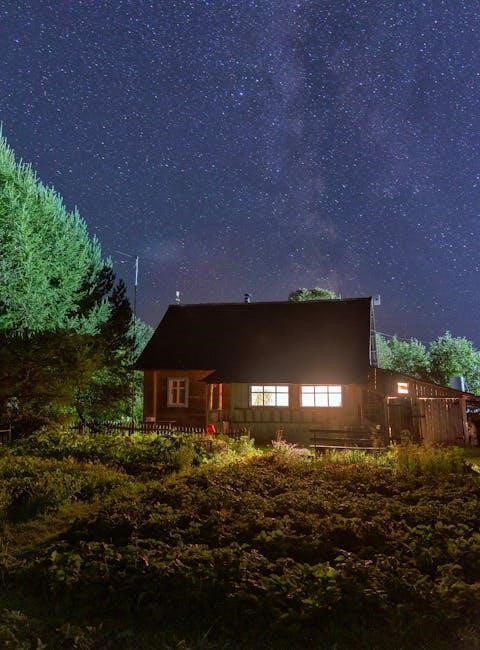
Night profoundly impacts human psychology‚ primarily through its connection to sleep and the disruption of circadian rhythms. The absence of light triggers melatonin production‚ promoting sleepiness and influencing mood regulation. Conversely‚ prolonged exposure to artificial light at night can suppress melatonin‚ leading to sleep disturbances and potential mental health issues.
Nighttime also amplifies existing anxieties and fears‚ rooted in evolutionary responses to vulnerability in darkness. This can manifest as heightened alertness‚ nightmares‚ or even panic attacks. Establishing a consistent nighttime routine is crucial for mitigating these effects‚ fostering a sense of safety and preparing the mind for restorative sleep‚ ultimately impacting daytime cognitive function and emotional wellbeing.
Sleep and the Nighttime Routine
A consistent nighttime routine is paramount for optimizing sleep quality and overall psychological health. This routine signals the body’s transition to rest‚ promoting the release of melatonin and regulating circadian rhythms. Key components include a relaxing pre-sleep activity – reading‚ gentle stretching‚ or a warm bath – and a consistent bedtime‚ even on weekends.
Minimizing screen time before bed is crucial‚ as blue light emitted from devices suppresses melatonin. Creating a dark‚ quiet‚ and cool sleep environment further enhances sleep quality. A well-established routine reduces sleep latency (the time it takes to fall asleep) and improves sleep duration‚ leading to improved mood‚ cognitive function‚ and physical health.
Nighttime Fears and Anxiety
The darkness of night can amplify existing anxieties and trigger specific fears‚ stemming from evolutionary predispositions and personal experiences. Common nighttime fears include fear of the dark (nyctophobia)‚ fear of intruders‚ and generalized anxiety about potential dangers. These fears often manifest as racing thoughts‚ increased heart rate‚ and difficulty falling asleep.
Addressing nighttime anxiety requires identifying triggers and implementing coping mechanisms. Relaxation techniques like deep breathing or progressive muscle relaxation can help calm the nervous system. Establishing a safe and secure sleep environment‚ limiting exposure to frightening content before bed‚ and seeking professional help when needed are also beneficial strategies for managing these anxieties.
Night and its Connection to Dreams
Nighttime‚ particularly during Rapid Eye Movement (REM) sleep‚ is intrinsically linked to dreaming. The brain exhibits heightened activity during REM sleep‚ consolidating memories and processing emotions‚ often manifesting as vivid and complex dream narratives. While the exact purpose of dreaming remains debated‚ theories suggest it aids in emotional regulation‚ problem-solving‚ and creative thinking.
The content of nighttime dreams can be influenced by daily experiences‚ unresolved conflicts‚ and subconscious desires. Interpreting these dreams‚ though subjective‚ can offer insights into one’s inner world. Understanding the science behind dreaming during the night provides a fascinating glimpse into the complexities of the human mind and its nocturnal processes.
The Science of Dreaming During the Night
Dreaming predominantly occurs during REM (Rapid Eye Movement) sleep‚ a stage characterized by brain activity resembling wakefulness. Neuroimaging studies reveal increased activity in the amygdala (emotion processing) and hippocampus (memory consolidation) during REM. This suggests dreams play a role in emotional regulation and memory formation.
Several neurochemicals‚ including acetylcholine and serotonin‚ fluctuate during sleep cycles‚ influencing dream vividness and content. The activation-synthesis theory proposes dreams are the brain’s attempt to make sense of random neural firings. However‚ other theories emphasize the cognitive and psychological functions of dreaming‚ linking them to problem-solving and emotional processing. Further research continues to unravel the intricate science behind nocturnal dreaming.
Interpreting Nighttime Dreams
Dream interpretation remains a complex field‚ blending psychological theory with subjective experience. While Freudian analysis focused on uncovering repressed desires through symbolic imagery‚ modern approaches emphasize personal associations and emotional context.
Recurring dreams often signal unresolved conflicts or anxieties. Common dream themes‚ like falling or being chased‚ can reflect feelings of insecurity or stress. However‚ interpretations vary greatly depending on individual life experiences. Keeping a dream journal can aid in identifying patterns and personal symbolism. It’s crucial to avoid rigid interpretations and instead explore the emotional resonance of dream content‚ recognizing dreams as unique expressions of the subconscious mind.
Resources for Further Exploration
Delving deeper into the concept of “night” requires exploring diverse academic and community-based resources. Online forums dedicated to dream analysis and sleep science offer platforms for discussion and shared experiences. Academic databases‚ such as JSTOR and Google Scholar‚ provide access to scholarly articles on the history‚ symbolism‚ and psychological effects of nighttime.
Furthermore‚ websites specializing in cultural studies often feature analyses of nighttime rituals and beliefs across different societies. Exploring literary criticism related to works prominently featuring night scenes can also offer valuable insights. Remember to critically evaluate sources and consider multiple perspectives when researching this multifaceted topic.
Online Forums and Communities Discussing Night-Related Topics
Numerous online platforms foster discussions surrounding the themes of night‚ darkness‚ and nocturnal experiences. Reddit hosts several subreddits dedicated to dreams (r/dreams) and sleep (r/sleep)‚ offering spaces to share interpretations and seek advice. Online forums focused on literature and gaming frequently analyze the symbolic use of night in narratives‚ like discussions surrounding “Fate/stay night”.
Dedicated communities also exist for exploring nighttime photography and astrophotography‚ sharing techniques and showcasing captivating images. These forums provide opportunities to connect with individuals sharing similar interests and gain diverse perspectives on the significance of night.
Academic Articles on the History and Symbolism of Night
Scholarly research delves into the historical evolution of “night” as a concept and its enduring symbolic weight across cultures. Articles explore the origins of time expressions like “at night‚” tracing linguistic shifts and societal perceptions. Studies examine how night has been historically associated with mystery‚ fear‚ and the unknown‚ influencing artistic and literary representations.
Furthermore‚ academic papers analyze the cultural variations in perceiving night – contrasting Eastern and Western perspectives. Research investigates the psychological effects of nighttime‚ including sleep patterns and anxieties. These resources provide a deeper understanding of night’s complex role in human history and consciousness.
Frequently Asked Questions About Night
Common misconceptions about nighttime often center around safety and productivity. Is night inherently more dangerous? While visibility is reduced‚ modern surveillance technologies offer increased security. Another frequent question: is nighttime less productive? This depends on individual circadian rhythms and task demands.
Concerns about nighttime safety are valid‚ prompting advancements in lighting and security systems. Addressing these concerns requires a balanced approach – acknowledging risks while leveraging technology for protection. Understanding the science of sleep and the impact of artificial light on natural cycles is also crucial for navigating the night effectively.
Common Misconceptions About Nighttime
A prevalent misconception is that nighttime is solely for sleep‚ hindering productivity. However‚ many individuals experience peak creativity and focus during evening hours. Another common belief is that nighttime is inherently more dangerous‚ fueled by media portrayals. While visibility is reduced‚ advancements in lighting and security mitigate risks.
Furthermore‚ some believe all nighttime activity is disruptive to natural rhythms; While excessive artificial light can be detrimental‚ controlled exposure doesn’t necessarily cause harm. Debunking these myths requires understanding individual chronotypes and the benefits of balanced nighttime routines‚ alongside technological advancements enhancing safety.
Addressing Concerns About Nighttime Safety
Nighttime safety concerns often stem from reduced visibility and perceived increased criminal activity. Mitigating these risks involves proactive measures like well-lit environments and community watch programs. Personal safety strategies include traveling in groups‚ sticking to familiar routes‚ and being aware of surroundings.
Technological advancements‚ such as improved surveillance systems and readily available emergency communication tools‚ significantly enhance nighttime security. Addressing anxieties also requires debunking myths about nighttime dangers and promoting responsible behavior. Education on self-defense and situational awareness empowers individuals to navigate nighttime environments confidently‚ fostering a sense of security.
The Future of Night: Technological Impacts
The future of night is inextricably linked to technological advancements‚ particularly in artificial lighting and surveillance. Increasingly efficient and adaptable lighting systems will reshape urban landscapes‚ potentially minimizing light pollution while maximizing safety. Simultaneously‚ sophisticated surveillance technologies‚ including AI-powered cameras and predictive policing algorithms‚ promise enhanced security but raise privacy concerns.
These developments will impact natural night cycles‚ affecting both human and animal behavior. Exploration into bio-adaptive lighting‚ mimicking natural light patterns‚ may mitigate some negative effects. The integration of smart city technologies will create interconnected nighttime environments‚ demanding careful consideration of ethical implications and equitable access.
Artificial Light and its Effect on Natural Night Cycles
The pervasive presence of artificial light dramatically alters natural night cycles‚ impacting ecosystems and human physiology. Light pollution disrupts circadian rhythms in both humans and wildlife‚ leading to sleep disorders‚ hormonal imbalances‚ and navigational difficulties for nocturnal animals. Migratory birds‚ sea turtles‚ and insects are particularly vulnerable to disorientation caused by excessive illumination.
Furthermore‚ artificial light suppresses melatonin production‚ a hormone crucial for regulating sleep and possessing antioxidant properties. Strategies to mitigate these effects include utilizing shielded lighting fixtures‚ reducing light intensity‚ and employing warmer color temperatures. Promoting “dark sky” initiatives aims to restore natural nighttime darkness and preserve ecological balance.
Nighttime Surveillance and Security Technologies
Advancements in technology have revolutionized nighttime surveillance and security capabilities. Infrared (IR) cameras‚ utilizing heat signatures‚ provide clear imagery in complete darkness‚ becoming essential for law enforcement and border control. Low-light cameras‚ enhanced with image intensifiers‚ amplify existing ambient light for improved visibility.
Drones equipped with thermal imaging and high-resolution cameras offer aerial surveillance‚ expanding monitoring range and accessibility. Sophisticated algorithms analyze footage in real-time‚ detecting anomalies and potential threats. However‚ these technologies raise privacy concerns‚ necessitating careful regulation and ethical considerations regarding data collection and usage to balance security with individual rights.